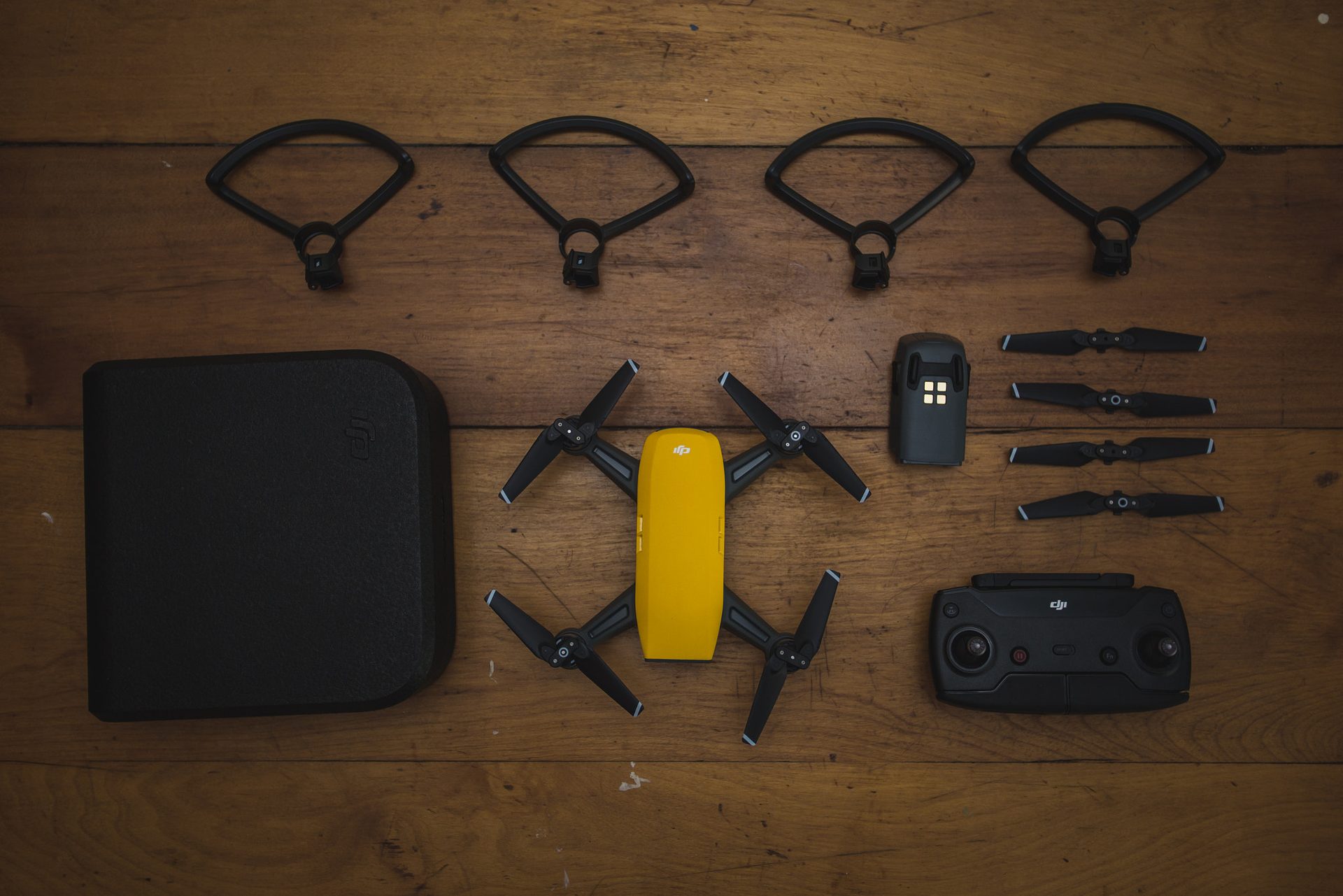
Before buying accessories, confirm the exact drone model you plan to use. Batteries, charging hubs, propellers, cases, controllers, phone mounts, and memory cards can all have model-specific requirements.
1. Extra batteries
One battery is usually enough to test the drone, but it can make practice feel rushed. Extra batteries help beginners repeat takeoffs, hovering, slow turns, and landing practice without ending the session too quickly.
Only use batteries made for the exact drone model. Battery shape, voltage, firmware support, and charger compatibility can differ even between similar-looking drones.
Search DJI Mini 4K batteries on Amazon →
2. Charging hub
A charging hub can make battery management easier if you have more than one battery. It helps keep the kit organized and makes it easier to prepare for the next practice session.
Check whether the hub charges batteries one at a time or in parallel, and make sure it is designed for your specific drone battery type.
3. Memory card
If your drone records photos or video to removable storage, choose a memory card that matches the drone maker’s speed and capacity requirements. A slow or unsupported card can cause recording problems.
Keep the card simple at first: reliable, compatible, and large enough for practice clips. A 64GB UHS-I Speed Class 3 (U3/V30) card is a reliable starting point for 4K recording on most DJI drones.
Search compatible microSD cards on Amazon →
4. Case or bag
A basic case or bag protects the drone, controller, batteries, propellers, and charging gear while you carry everything to a practice location. It also makes it less likely that you forget a small part.
Look for a layout that fits your actual kit. A case made for one drone may not fit another drone’s arms, controller, or battery shape.
5. Spare propellers
Propellers are wear items. Beginners can nick a prop during a tip-over, hard landing, or brush with grass. Having spares ready keeps a small mistake from ending your practice day.
Match propellers to the exact drone model and install them according to the drone maker’s instructions. Prop direction and placement matter.
6. Landing pad
A landing pad gives you a cleaner takeoff and landing surface, especially on grass, dirt, sand, gravel, or damp ground. It can also make it easier to see your landing target while practicing.
This is not required for every beginner, but it is one of the simpler accessories that can make early flights feel more controlled.
Search drone landing pads on Amazon →
7. Prop guards for close practice
Prop guards may help when practicing indoors, near obstacles, or in very tight areas. They do not make flying risk-free, and they can affect flight behavior, but they can be useful for slow beginner practice in controlled spaces.
Use guards only when they are compatible with your drone and appropriate for the practice environment.
8. Phone or tablet compatibility
Many beginner drones rely on a phone or tablet for the live view, settings, updates, maps, or flight app. Before buying, check that your device supports the drone app and physically fits the controller or mount.
Also check cable type, operating system requirements, app availability, screen brightness, and whether your device has enough battery life for a practice session.
9. Rules, registration, and TRUST reminder
Accessories are only part of being ready. U.S. recreational flyers should verify current FAA guidance before flying, including TRUST and registration requirements that may apply based on use, aircraft weight, and current rules.
Drone rules can change, and this site is not legal advice. Check the FAA directly when preparing to fly.
Open FAA TRUST information Open FAA recreational flyer page10. A simple first-drone kit
A calm starter kit is usually better than a pile of accessories. Think in terms of practice time, protection, compatibility, and safe preparation.
- Drone and controller
- Compatible extra battery or batteries
- Compatible charging hub if using multiple batteries
- Supported memory card if the drone records to removable storage
- Case or bag that fits the exact kit
- Spare propellers made for the exact model
- Landing pad for rough or dusty surfaces
- Prop guards when practicing in tight spaces, if compatible
- Phone or tablet that supports the drone app
- Current rule check before the first flight
Bottom line
Buy the gear that makes early practice easier, not the gear that makes the kit look impressive. Extra flight time, safe storage, compatible parts, and current rule awareness matter more than advanced accessories during the first month.